

A friendly Canadian and a gut feeling
Good things seem to happen when I follow my gut. I’ve even read that the intelligence of the gut can be measured and is comparable to that of a Golden Retriever. All the more reason to trust it.
While I was living in New Zealand, I was considering the possibility of making a trip through India at some point. And it being India, I wanted to find some sort of meditation centre while I was there. I had taken a number of meditation classes and practised a few techniques over the years, and found it to be an essential tool in my pursuit of wellness. One night, I casually mentioned this to a friendly Canadian tourist while we chatted happily on bunk beds in our hostel. That’s when she gave me a recommendation that would end up changing my life years later. She told me about a 10-day silent meditation program she went to in Nepal. It sounded right up my alley, so I wrote the information down in my journal in case I found myself in Nepal one day.
The Dalí Llama, camel farts and much, much more
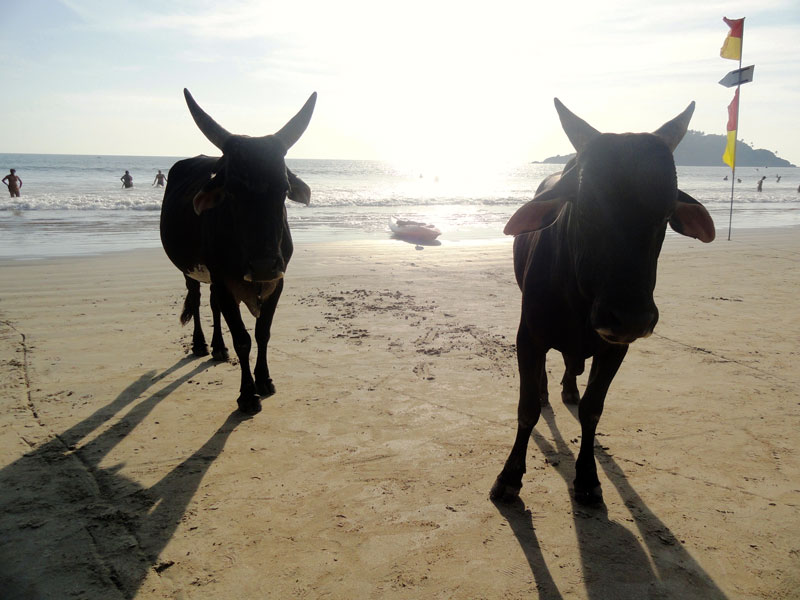
After another year spent living in Australia, with a bit of money saved, I headed out on an epic adventure through SE Asia, India and then Nepal. The sights, sounds, people, food and cultures all flooded my senses. I saw the Dalí Llama speak in his home temple… Rode camels into the desert and camped near the Pakistan border… I trekked through the Himalayas, testing the limits of my body… I saw families mourn and burn their dead on river banks… Women chatting on rooftops as they spent hours washing the family’s laundry… Extreme poverty and extreme wealth, callously living side by side… Monkeys, packs of stray dogs and spiders the size of dinner plates started to feel commonplace, as did the cows wandering beaches, streets and even within restaurants… The constant honking, horrible air pollution, frequent electrical blackouts and mountains of garbage, all within some of the most beautiful scenery on earth… Men looked at me like I was nothing but sex… I felt scared, ashamed of my skin, privilege and nationality… I felt welcomed and seen, and delighted to find that a joke about a camel fart can bring people together despite language barriers.
While the entire experience gave me many incredible memories and insights, I was also exposed to some horrifying realities and made to confront the stereotypical role of being a white, American tourist. I still don’t know what to do with the guilt and shame of participating in a system that causes such inhumanity as a byproduct of our economic disparity. Being a tourist or depending on tourists is an uncomfortable dynamic that often encourages false encounters and expectations, add to that an enormous wealth gap and the situation starts to require some level of apathy to be at all bearable.



Observation with equanimity
It had been about six months of travelling before I found myself in Nepal and ready to look up that meditation centre recommended to me years earlier. I had no idea what I was getting myself into, but figured I knew a thing or two about meditation, so I should be fine. I expected it to be hard, but felt up to the challenge. So I stumbled blindly into learning Vipassana, which I now believe to be the most powerful meditation technique there is. Vipassana is the meditation technique that Buddha developed and taught to his disciples. And in order to learn it, one must immerse themselves in this 10 day program that I was about to start. So in silence, for 10 days, I sat as still as I could manage through the pain, in meditation, for 10 hours, each day.
It was one of the hardest things I’d ever done, and it taught me more than I could have imagined. The lessons and concepts can’t be fully understood without also having the experience. This is why learning the technique requires the completion of at least one ten-day program. Any words of wisdom that might be shared about the experience might sound cliché or profound, but with experience, the weight of the words can be more fully understood.
I will say that after the experience, I better understood principles that have guided me through life ever since. This type of meditation requires digging deep into awareness of judgment, becoming better at using pain and adversity as a tool, differentiating between actual sensation and imagination, and how that all ties together with a comprehension of the concept of truth and honesty. In the lessons learned through the experience, I also realized a new depth to the meaning of love, as it can only truly exist without judgment. Practising Vipassana is an exercise in experiencing the reality and truth of ‘being’ as fully as possible, within the capabilities and limitations of our senses. It might sound counterintuitive, but I meditate to get out of my head. As a person who can tend to spend too much time in imagination and contemplation, spending time focusing on my physical reality is essential. It highlights the difference between knowing in the mind and knowing in the body, within the present moment, the latter being far more powerful.
I’ll be forever grateful to that lovely woman for her excellent recommendation.


